

A new boiler is one of the larger, less glamorous purchases a homeowner makes. But the choices you make at the installation will shape your energy bills, your comfort and your repair costs for years afterwards. The trouble is that most people only buy a boiler once every ten to fifteen years, so it never becomes familiar. This guide is designed to close that gap: what your options are, what the process involves, what the rules require, and what a fair job looks like, whoever you end up hiring.
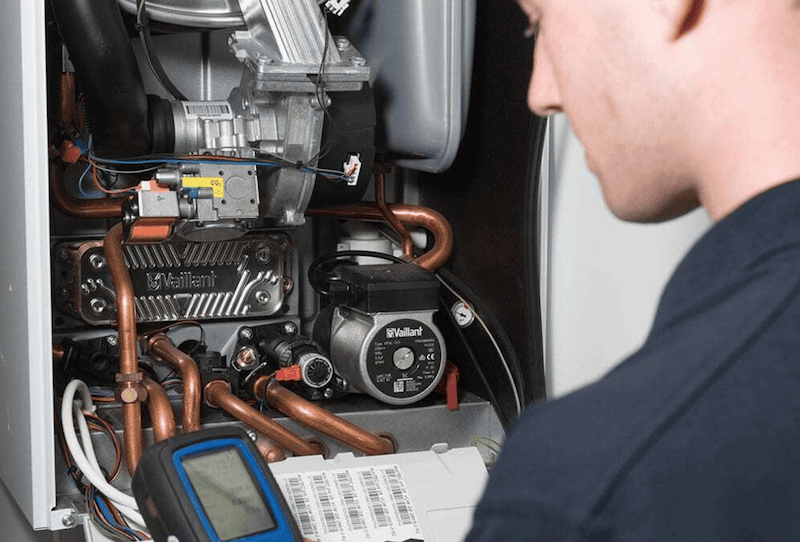
Learn more about our boiler installation process
How do you know when it’s time for a new boiler?
A boiler replacement is usually prompted by one of a few things:
- An old unit becoming unreliable or expensive to repair
- Rising energy bills from poor efficiency
- A home renovation that changes your heating needs.
As a rough guide, most gas boilers last around 10 to 15 years. Beyond that, parts get harder to source and efficiency drops.
Warning signs worth acting on include frequent breakdowns, rising running costs, a boiler that needs regular re-pressurising, radiators that are slow to heat, or a unit that’s noticeably noisy. If yours is over a decade old and showing several of these, planning a replacement on your own timetable is far less stressful (and usually cheaper) than being forced into an emergency swap mid-winter.
What are the main types of boiler, and which suits your home?
There are three main types, and the right one depends mostly on your home’s size, water pressure and hot-water demand rather than personal preference.
| Boiler type: | How it works: | Best suited to: |
| Combi (combination) | Heats water directly from the mains on demand, no separate tank or cylinder | Smaller homes and flats with one bathroom. Saves space |
| System | Works with a hot-water cylinder (but no loft tank); components built in | Larger homes with higher hot-water demand or more than one bathroom |
| Regular (conventional / heat-only) | Uses both a cylinder and a cold-water tank in the loft | Older or larger properties, often where the existing pipework suits it |
A common mistake is fitting a combi in a large household with several bathrooms, where simultaneous demand can leave the hot water running lukewarm. Matching the boiler to how your household actually uses water is the single most important technical decision and a good installer will ask about it before recommending anything.
How much does a boiler installation cost?
This is the question everyone wants answered, and the honest reply is that it varies widely. The figures below are broad, indicative UK ranges for supply and fitting combined, not a quote, and genuinely helpful only as a rough framework. Actual prices depend on the brand, your home, the complexity of the job and the market at the time.
| Installation type: | Indicative supply-and-fit range: | What pushes the price up: |
| Like-for-like combi swap | ~£1,800–£3,500 | Premium brand, difficult access, extra controls |
| New system boiler + cylinder | ~£2,000–£4,000 | Cylinder size, pipework changes |
| Regular boiler replacement | ~£2,000–£4,000 | Age of existing system, condition of pipes |
| Conversion (e.g. regular to combi) | ~£3,000–£4,500+ | Removing tanks, re-routing pipework, relocation |
These ranges move over time and differ between installers, so always get two or three written quotes and compare exactly what each includes, such as a filter, a flush, controls, the warranty and removal of the old unit can all sit inside or outside the headline price.
What actually happens during a boiler installation?
Knowing the sequence helps you spot a thorough job from a rushed one. A typical installation runs roughly like this:
- The engineer isolates and drains the old system
- Removes the old boiler
- Fits the new unit and any new pipework or controls, and flushes the system to clear debris (a power flush or chemical flush protects the new boiler).
- Fill and pressurise the system
- Fit a system filter
- Commission and test the boiler
- Complete the paperwork.
That paperwork matters more than it looks. You should receive a completed Benchmark checklist (needed to validate the manufacturer’s warranty) and a Building Regulations Compliance Certificate. You need to keep both of these safe.
How long does a boiler installation take?
A straightforward like-for-like swap – same type of boiler, same location – is usually completed in a single day. You should expect longer if you’re changing boiler type, moving the boiler to a new position, converting from a tank-fed system to a combi, or if the existing system needs significant work. A full conversion or relocation might take two to three days. A reputable installer will give you a realistic timescale in writing before starting.
What are the rules around boiler installation?
Boiler installation in England is tightly regulated, and understanding the basics protects you.
First, any work on gas appliances must, by law, be carried out by an engineer on the Gas Safe Register. You can and should check an engineer’s registration before work begins.
Second, boiler installations are notifiable under Building Regulations. A Gas Safe registered installer can self-certify the work and notify your local authority on your behalf, after which you receive the compliance certificate mentioned above. If that step is skipped, it can cause problems when you come to sell the property.
Finally, the Boiler Plus standard, in force since 2018, sets minimum efficiency and control requirements. New gas boilers must meet a minimum efficiency rating, and combi installations must include at least one additional energy-saving measure, such as smart controls, weather compensation, load compensation or flue-gas heat recovery.
Should you consider a heat pump instead?
It’s worth at least asking the question. With the long-term move away from fossil-fuel heating, an air-source heat pump is an increasingly common alternative to a gas boiler , particularly in well-insulated homes. Heat pumps run on electricity, are far more efficient than they sound, and may be eligible for government support toward installation costs.
They aren’t right for every home, and the upfront cost is higher, so it’s a decision to weigh carefully against your property’s insulation and your budget. Grant schemes and eligibility change regularly, so check the current position on GOV.UK and the Energy Saving Trust rather than relying on older figures. For many Chichester-area homes a modern condensing gas boiler will still be the pragmatic choice but it’s better to make that decision knowingly than by default.
How do you choose a good installer in the Chichester area?
The Chichester area has a real mix of housing, from period cottages in the surrounding villages to modern estates, and older properties in particular can throw up surprises in the pipework, so local experience is genuinely useful. Beyond that, the markers of a good installer are the same everywhere:
- Confirm they’re Gas Safe registered and ask to see the card. You can verify the number online.
- Get two or three written quotes and compare like for like.
- Ask what’s included: system flush, filter, controls, warranty length, and removal of the old boiler etc.
- Check independent reviews and, ideally, ask for a local reference.
- Make sure they’ll handle Building Regulations notification and provide the certificates.
A few questions worth asking outright:
- What size and type of boiler are you recommending, and why?
- Is a power flush included?
- How long is the manufacturer’s warranty
- Does it require annual servicing to stay valid?
Getting confident, specific answers to these questions will be a good sign.
Frequently Asked Questions
Do I legally need a Gas Safe registered engineer to install a boiler?
Yes. Any gas work in the UK must be done by a Gas Safe registered engineer. You can check their registration on the Gas Safe Register.
How long does a new boiler last?
Typically 10 to 15 years, and often longer with annual servicing and good-quality installation.
Will a new boiler save me money?
Usually, yes. A modern condensing boiler is significantly more efficient than an older non-condensing one, which can reduce gas use, though the exact saving depends on your home and old boiler.
Do I need to keep servicing the boiler after installation?
In almost all cases, yes. Manufacturers typically require an annual service to keep the warranty valid, and it keeps the boiler running safely and efficiently.
What paperwork should I receive?
A completed Benchmark checklist and a Building Regulations Compliance Certificate. Keep both, especially for when you sell.
Is a combi always the best choice?
No. Combis suit smaller homes with one bathroom. Larger households with higher hot-water demand are often better served by a system or regular boiler.
Boiler Installation in Chichester
A good boiler installation is quiet, compliant and forgettable. You should get the type right for your home, insist on a Gas Safe registered engineer, understand the Boiler Plus and Building Regulations requirements, compare quotes on a like-for-like basis, and keep your paperwork. If you do all that, you’ll be well placed to judge any installer on their merits.
If you’re looking for a local installer, Taskforce Heating and Plumbing is an established, Emsworth-based team covering Chichester and the surrounding area, and is happy to advise on the right option for your home.
But whoever you choose, the checklist above is the same because an informed homeowner gets a better installation.
Find out more about our boiler installation in Chichester or give us a call on: 01243 370 880